Timber weatherboards rarely rot simply because they are old. Well detailed and protected timber can last for generations. Decay takes hold when boards stay damp for long periods and cannot dry out again, and the visible damage is usually a symptom of something else, such as failed paint, exposed end grain, a leaking gutter, poor detailing or restricted airflow. The sensible starting point is not a tin of paint or a skip full of new boards, but understanding why the timber is staying wet. Put that right, and any repair stands a far better chance of lasting.
Timber Rot Is Usually a Moisture Problem
Softwood weatherboarding has clad buildings across Kent and East Sussex for centuries, and a good deal of it is still doing its job after many decades. Timber that is correctly detailed, kept protected and allowed to dry between wettings can last a very long time. The boards are meant to shed rain and then dry out in the wind and sun. Trouble begins when that drying stops happening and the timber is left damp for extended periods.
Fungal decay requires timber to remain sufficiently damp for an extended period. This is why the visible rot is often a symptom rather than the original fault. A soft board is telling you that water has been getting in and lingering somewhere it should not. Before deciding how to put the board right, it is worth working out what has kept it wet, because otherwise the same thing tends to happen again.
Common Reasons Weatherboards Begin to Rot
Weatherboards seldom fail for a single reason. More often a few things combine to keep one area damp. These are the causes we see most often on older properties.
Failed or Deteriorating Paint Coatings
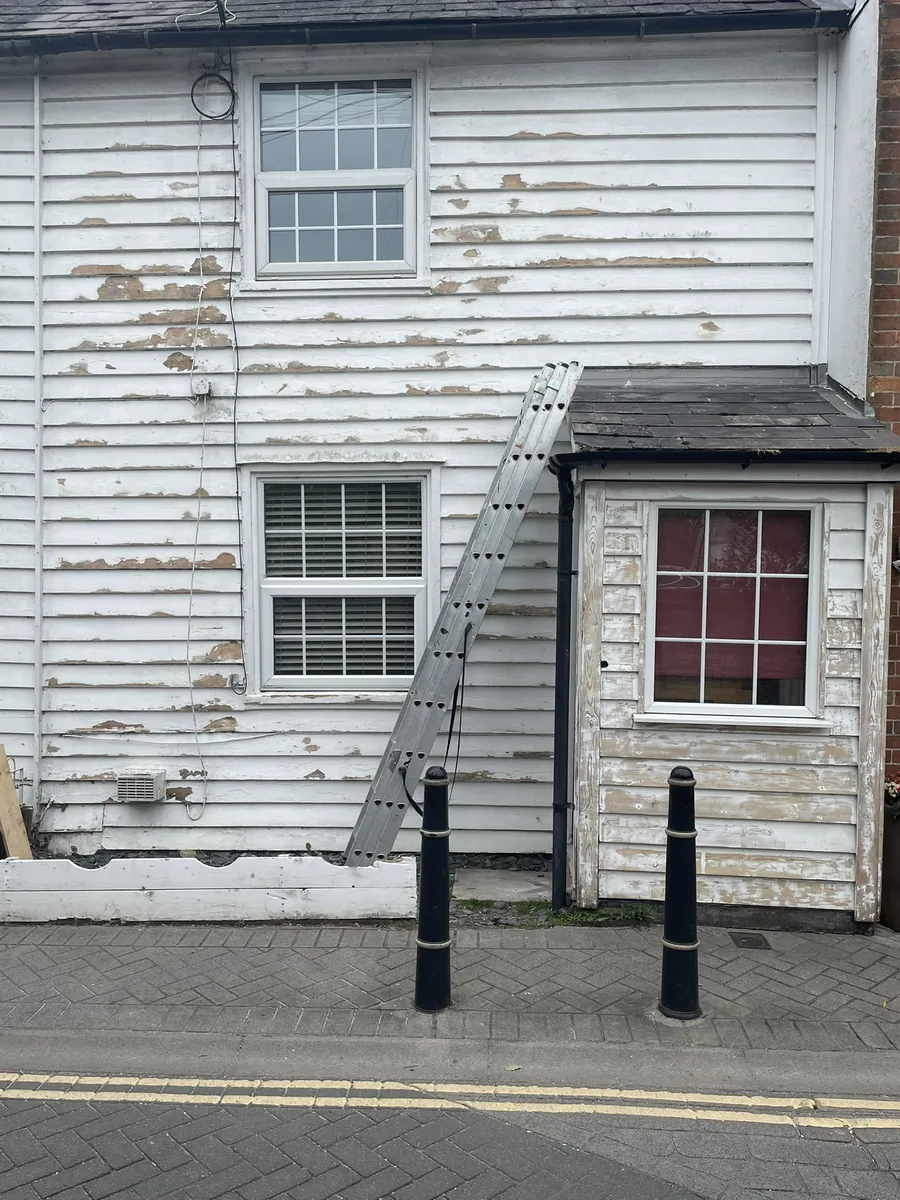
Paint is the first line of defence, and when it hardens, cracks and flakes it stops doing its job. Water finds its way through the gaps, soaks into the timber and is then held there by the very coating that was supposed to keep it out. It is worth being clear about what a coating can and cannot do. A good paint system protects sound timber and buys years of service, but it cannot compensate for boards that have already decayed, for detailing that lets water in, or for an active leak somewhere above. Paint manages water on the surface. It does not cure a problem coming from behind.
Exposed End Grain and Board Joints
Timber drinks water far more readily through its cut ends than through its face. Board ends, corners, mitres and the joints where two boards meet are therefore among the most vulnerable points on any elevation. Once a joint opens slightly or an end is left unprotected, moisture is drawn in and sits where it cannot easily escape. A great deal of localised decay starts at exactly these spots and works outwards, which is why they always repay a close look.
Leaking Gutters, Downpipes and Roof Details
A surprising amount of weatherboard decay has nothing to do with the boards themselves. A blocked or split gutter, a leaking downpipe joint or a tired roof detail can send the same run of water down the same stretch of cladding every time it rains. That area never gets a chance to dry, and eventually it fails. When we find decay concentrated in one vertical band or below a particular fitting, the rainwater goods are usually the first thing to check.
Window and Door Openings
The weatherboards around windows and doors deserve particular attention. Cills, trims and the junctions where boarding meets a frame are all places where water can be directed, collected or trapped. Older openings may also have settled a little over the years, opening up gaps that let moisture in. These areas are worth inspecting carefully rather than assuming that because the boards look continuous they are sound.
Low Level Boards and Rain Splash
The lowest courses of boarding tend to suffer first. Rain splashes back off paths, patios and hard standing, ground levels are sometimes higher than they ought to be, and planting or vegetation can sit against the timber and hold moisture there. Where the clearance between the bottom of the boards and the ground is too tight, the lower edges stay damp long after the rest of the elevation has dried. It is no coincidence that soft, friable timber is so often found along the bottom edge.
Inadequate Ventilation or Restricted Drying
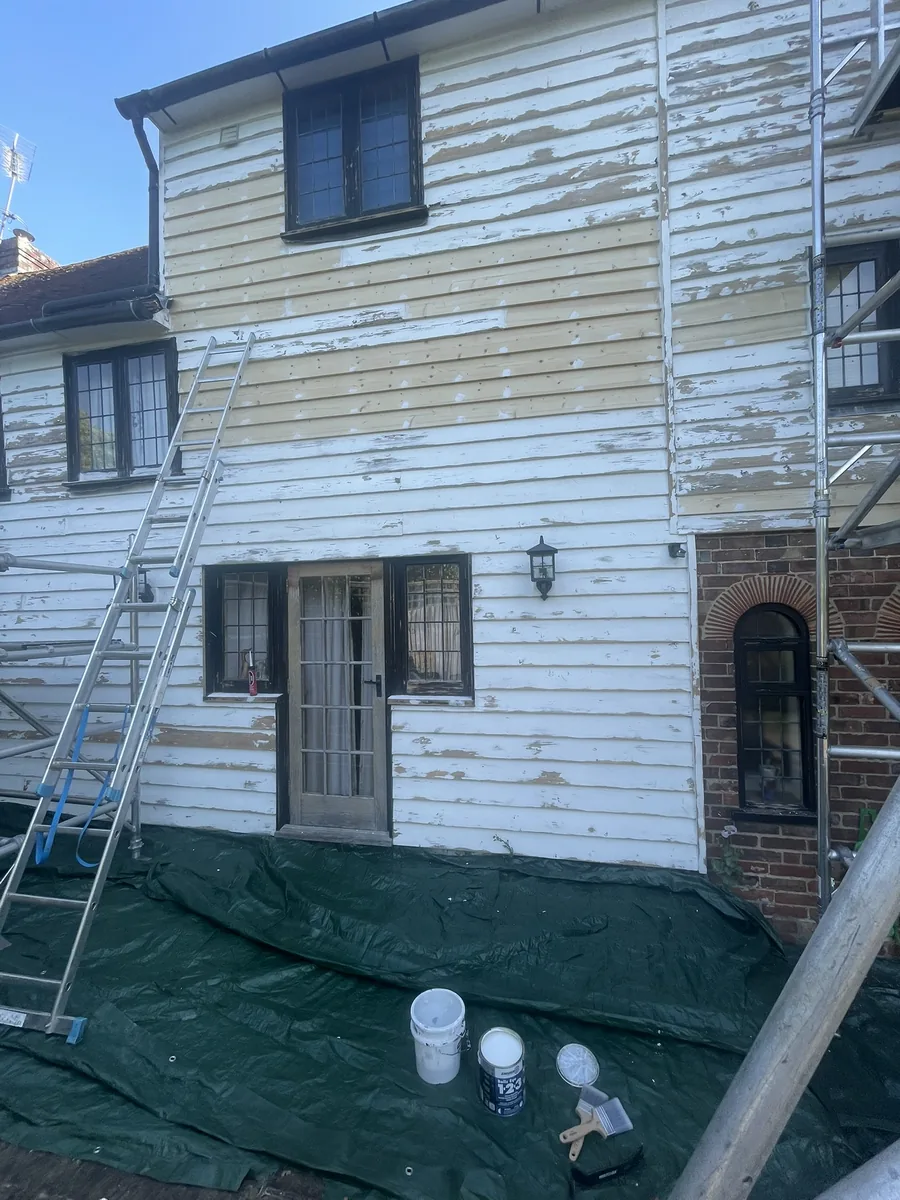
Timber needs the opportunity to dry. Where airflow is restricted, where moisture becomes trapped behind the boards, or where detailing prevents water from escaping, decay is far more likely to take hold. This does not mean that every traditional building has, or should be given, a modern ventilated cavity. Many older properties were built quite differently and have performed well for a long time. It does mean that anything which stops the timber drying, from a lean-to built tight against an elevation to an impermeable finish, deserves thought.
Unsuitable Previous Repairs or Coatings
Not every earlier repair helps the building. Incompatible materials, boards that do not match the original profile, heavy beads of sealant and unsuitable impermeable finishes can all cause problems, sometimes by concealing decay and sometimes by stopping the timber from drying. This is a matter of judgement rather than a blanket rule. Some modern coatings and products perform perfectly well on traditional timber when they are chosen and applied sensibly. The difficulty comes when a finish or a repair traps moisture instead of managing it, and the trouble then continues out of sight.
Neglected Maintenance
Most serious decay begins as something small. A little flaking paint, a joint that has opened, a short length of board that has started to soften. Left alone through a few wet winters, these minor faults let in more water and spread. Caught early, the same problems are usually quick and inexpensive to deal with. A large part of protecting weatherboarding is simply noticing and acting on the small things before they grow.
Signs That Weatherboards May Be Deteriorating
A few things are worth watching for on a weatherboarded elevation:
- Timber that feels soft, spongy or crumbling when pressed, rather than solid.
- Paint that repeatedly bubbles, cracks or flakes, particularly in the same spots.
- Dark staining that remains after a spell of dry weather.
- Open joints or visible gaps between boards or at their ends.
- Boards that are split, distorted, cupped or pulling away from the frame.
- Deterioration concentrated around fixings, corners, windows or doors.
- The same area failing again a season or two after it was last dealt with.
- Lower board edges that feel weak, powdery or friable.
None of these on its own means an elevation is finished. Equally, the surface does not always tell the whole story. Boards can look tired and be perfectly sound beneath, and occasionally they can look reasonable while decay is at work behind the paint. That is why a proper assessment matters more than a verdict from the ground.
Why Painting Over Rotten Weatherboards Does Not Work
It is tempting to think a fresh coat of paint will put things right, and for a short while it can certainly make an elevation look better. The problem is that paint cannot restore timber that has already broken down, and it does nothing about the moisture that caused the decay in the first place. Worse, painting over damp or failing timber can seal the moisture in, so the deterioration carries on quietly underneath and reappears, often more advanced than before. Sound timber benefits enormously from good preparation and paint. Decayed timber needs repairing or replacing first, and the source of the water addressed, before any finish is worth applying.
Can Rotten Weatherboards Be Repaired?
In many cases, yes, and repair is usually the right place to start. Depending on the extent and location of the decay, sensible repair can involve:
- localised timber repairs to affected areas
- splice repairs, where only the failed section of a board is cut out and renewed
- removing sections that have gone beyond saving
- replacing individual boards while their neighbours stay in place
- retaining as much sound original material as possible
- matching the existing profile, width and dimensions so the repair is not obvious
The right approach depends on how deep and widespread the decay is, where it sits on the building, and on the construction and significance of the property itself. It would be wrong to promise that every damaged board can be saved, because some cannot. But retaining and repairing sound timber wherever it is practical is at the heart of our heritage weatherboard repair service, and you can see the results of that approach across our recent projects.
When Is Replacement Necessary?
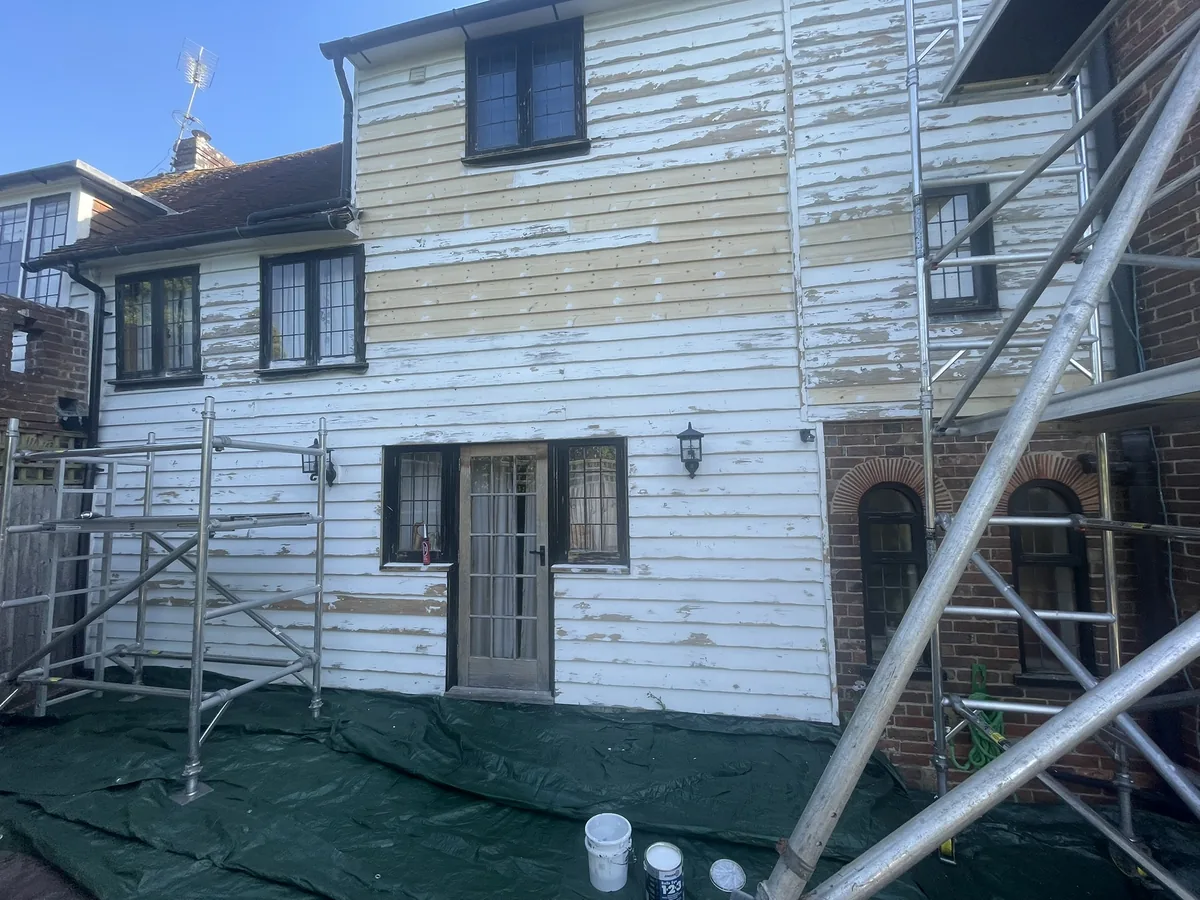
Sometimes repair is not enough. Where timber has lost its integrity, where decay is widespread rather than confined to a few boards, or where earlier repairs have repeatedly failed, selective sympathetic weatherboard replacement becomes the sensible course. The important principle is that replacement should be driven by the genuine condition of the timber rather than by convenience. It rarely means stripping a whole building. More often it is one exposed elevation, or an upper section above a brick ground floor, that needs renewing while the rest is left untouched. New boards should be matched to what is already there so the work sits naturally within the elevation.
Preventing the Problem From Returning
Once repairs are done, a little ongoing care goes a long way. The points that make the most difference are straightforward:
- correct the source of the water first, before any cosmetic work
- keep gutters and downpipes clear and in good repair
- inspect the vulnerable joints, board ends and corners from time to time
- maintain a suitable protective coating and deal with it before it fails completely
- keep ground levels, drainage and clearance so the timber can dry
- keep planting and vegetation from holding moisture against the boards
- attend to small, local defects before they have a chance to spread
- arrange an occasional look at the most exposed elevations
Good preparation and the right finish are a large part of this, which is where our specialist weatherboard preparation and painting fits in. A well prepared and protected elevation simply needs far less attention over the years than one that was painted in a hurry over problems left unaddressed.
Special Considerations for Listed and Period Properties
Historic buildings ask for an individual and sympathetic approach. Before any work begins it is worth considering the significance of the original fabric, the existing board profiles, the way the building was constructed and the finishes that have been used on it before. On a listed property the weatherboarding is part of what gives the building its protection, so decisions about repair and replacement carry more weight than they would on a modern house.
There is also the question of permissions. Listed building consent, or other approval, may be required for some alterations, and the position is not always clear cut. Like-for-like repair is often treated pragmatically, but that is not a guarantee, and significant replacement can be viewed differently. Where there is any doubt, the right step is to seek advice from the relevant local planning authority or conservation officer before work starts. We can carry out the work sympathetically, but we do not provide legal advice on consent, and we would never suggest that all repairs are automatically exempt or, equally, that all like-for-like work always needs an application.

Arrange a Weatherboard Assessment
If you are concerned about soft timber, repeated paint failure or visible deterioration, the first step is to understand why the weatherboards are staying damp. Weatherboards can assess the condition of the existing timber, identify the likely causes and explain whether careful repair, selective replacement or improved preparation is the most appropriate way forward.
Common Questions
Does peeling paint mean the weatherboards are rotten?
Not necessarily. Peeling or flaking paint means the finish has failed and is letting the timber get wet, which is a warning worth acting on. In many cases the boards underneath are still sound and simply need proper preparation and repainting. In others the same failure has allowed decay to begin. The only way to know is to get close to the timber and check it, rather than judging from the paint alone.
Can individual rotten weatherboards be replaced?
Often, yes. Where decay is confined to one or two boards, those can usually be taken out and renewed on a matching profile while the sound boards around them stay in place. Sometimes only the failed lower section of a long board needs cutting out and splicing. Whether that is possible depends on how far the decay has spread and where it sits on the elevation.
Why do weatherboards often rot near the ground?
Lower boards take the most punishment. Rain splashes back off paths and hard surfaces, ground and planting can hold moisture against the timber, and clearance is often tighter than it should be. That combination keeps the lowest courses damp for longer, so they tend to show decay first.
Can rotten weatherboards simply be filled and painted?
Filler and paint can disguise decay for a while, but they cannot restore timber that has already broken down, and they do nothing about the moisture that caused the problem. Painting over soft or failing timber usually means the trouble returns, often worse, because the damp is now sealed in. Genuinely decayed sections need cutting out and repairing or replacing.
Do listed weatherboard repairs require consent?
It depends on the work and on the building. On a listed building the weatherboarding is part of the protected fabric, and significant replacement may require listed building consent, while sympathetic like-for-like repair is often treated more pragmatically. The position is not always clear cut, so the sensible step is an early conversation with your local authority conservation officer. We are not able to give legal advice on consent.