The warning signs that matter most are not simply cosmetic. Repeated paint failure in the same place, staining that stays after dry weather, soft or crumbling timber, open joints, boards that have worked loose and deterioration around gutters, windows and lower edges can all indicate that moisture is entering the timber or failing to dry out. None of this automatically means an entire elevation needs replacing. It does mean the boarding is worth a proper look, because understanding the cause early is what gives the best chance of keeping sound original material and stopping a small defect from turning into a larger repair.
Not Every Tired Weatherboard Is Rotten
It is easy to look at a weatherboarded elevation that has seen better days and assume the worst. In practice, a tired appearance and failed timber are two different things. Paint can break down while the boards beneath it remain perfectly sound, and years of dirt, algae and general weathering can make an elevation look far worse than it actually is. An isolated defect in one or two places does not condemn the rest of the boarding.
The reverse is also true. Paint that still looks reasonable can occasionally sit over timber that has started to go behind it, which is why appearance alone does not settle the question either way. A close inspection of the timber itself is a good deal more reliable than a verdict formed from the ground, and it is usually the only way to tell tired from failed with any confidence.
Repeated Peeling, Bubbling or Flaking Paint
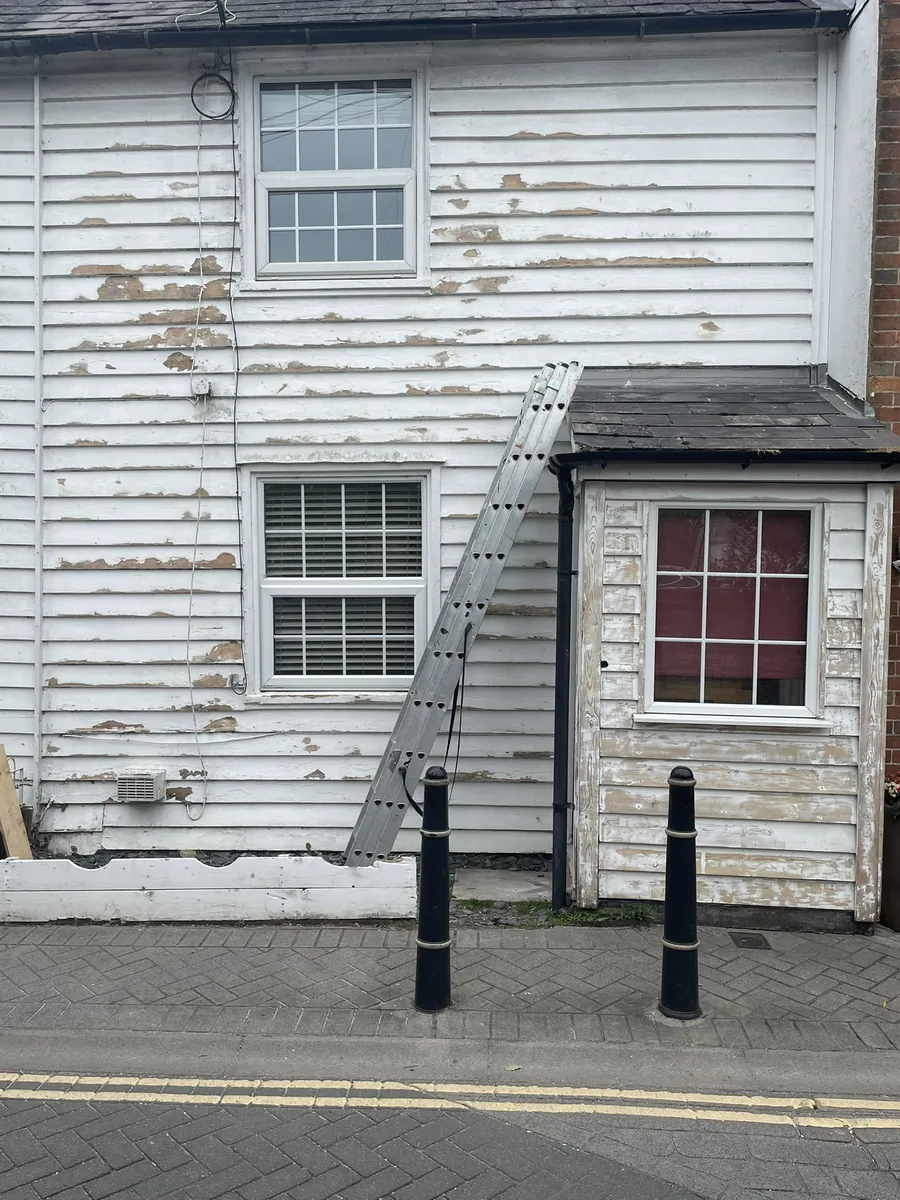
Paint that lifts, bubbles or flakes is the sign owners notice first, and it can have several causes. Among the most common are:
- age and long exposure to sun and weather
- inadequate preparation during earlier work
- moisture entering at joints or board ends
- water from a leaking gutter or downpipe
- damp timber that was painted before it had dried
- an unsuitable coating that does not let the timber breathe
- movement in the timber breaking the paint film
A single patch of tired paint does not necessarily mean the timber beneath has decayed. Paint that keeps failing in exactly the same area, season after season, is different and worth investigating, because it often means moisture is getting to that spot from somewhere. It does not follow that the timber has decayed, and it would be wrong to assume it has. Where the boards underneath are sound, thorough specialist weatherboard preparation and painting may be all that is needed to put it right for years.
Soft, Crumbling or Friable Timber
Timber that feels soft, spongy or powdery, or that crumbles at an edge, may have lost its integrity. This is the clearest indication that a board has started to break down rather than simply weather. It tends to show up first in the more vulnerable places on an elevation:
- board ends, where the grain is exposed
- the lower edges of boards
- around fixings
- beneath windows
- around door openings
- at corners
- below leaking gutters and downpipes
This is not an invitation to go poking at the timber to test it. Destructive probing can damage historic fabric, and reaching high level boards is not something an owner should attempt from a ladder or roof. An assessment should always be carried out safely and without causing unnecessary harm to the building, which is one of the reasons it is worth having someone look who is set up to do it properly.
Dark Staining That Does Not Clear in Dry Weather
All timber darkens when it is wet and lightens again as it dries, so a stain that appears after rain and fades over the following days is usually nothing to worry about. What is more telling is staining that stays put through a sustained dry spell. When a mark does not clear, it suggests the timber in that area is holding moisture rather than shedding it.
Persistent staining can point to recurring damp, water running from a defective detail above, moisture trapped behind a coating, poor drying in a shaded or enclosed spot, or a problem around a joint or opening. It is not proof of decay on its own, and a dark patch does not always mean rot. It is simply a sign that the area is worth understanding rather than painting over.
Open Joints and Visible Gaps
Gaps between boards, or at the ends where they meet a trim, can open up for a number of reasons:
- natural timber movement with the seasons
- fixings that have failed or worked loose
- earlier repairs that have since moved
- distortion in the boards
- shrinkage of the timber
- deterioration at the board ends
An open joint matters because it can let wind driven rain reach the parts of a board least able to cope with it. The temptation is to fill every gap with sealant, but that is rarely the right answer. Sealing indiscriminately can trap moisture behind the boards and stop them drying, and it can hide the very cause that needs addressing. Working out why a joint has opened is more useful than simply closing it up.
Boards That Are Split, Cupped or Distorted
Weatherboards can move in several ways as they age. It helps to know what the terms mean:
- splitting, where the timber cracks along the grain
- cupping, where a board curls across its width
- warping or twisting out of its original plane
- edges lifting away from the boards below
- boards no longer sitting correctly over one another
Movement on its own does not always mean a board needs replacing. Some boards remain sound despite having shifted and can be carefully refixed once the reason for the movement is understood. Others will have deteriorated past the point where a repair would last. Which is which is a matter of judgement based on the condition of each board, not something to decide from the ground.
Boards Pulling Away or Fixings Failing
A board that has sprung away from the frame is not necessarily a failed board. Loose boarding can be the result of:
- fixings that have corroded or given way
- timber movement over many years
- decay in the timber around the fixing
- movement in the supporting construction behind
- a previous repair that was not suited to the building
Where the board itself is still sound, it can often be saved and refixed securely once the reason it worked loose has been dealt with. Simply nailing it back without understanding why it moved tends to be a short lived fix. Careful refixing of sound boarding, rather than replacing it, is a large part of our heritage weatherboard repair service.
Deterioration Around Windows and Doors
The boarding around openings tends to work harder than the rest of an elevation, and it is a common place for trouble to begin. Water is directed around windows and doors, cills and trims create junctions where boards stop and start, and old sealants or coatings at these points can fail. Movement can open small gaps, end grain may be left exposed, and previous repairs around an opening sometimes trap water rather than shedding it.
None of this means that local deterioration around a window or door condemns the surrounding boarding. More often it is a contained problem that can be dealt with in that area, provided the reason the water is getting in is understood and corrected at the same time.
Lower Weatherboards Deteriorating First
It is common to find the lower courses of an elevation in poorer condition than the boards higher up. The reasons are usually to do with water and drying at the base of the wall:
- rain splashing up from a hard surface close to the wall
- ground levels that have been raised over the years
- vegetation growing against the timber
- poor drainage holding water near the base
- restricted air movement that slows drying
- damp collecting around the lower edges
Lower boards often take the greater share of the exposure, so it is no surprise when they show wear first. Even so, every property behaves differently, and the extent of any deterioration needs to be judged on the building itself rather than assumed.
Repeated Failure Near Gutters, Downpipes and Roof Details
Deterioration that runs in a vertical line, or sits directly below a fitting, is a strong hint that water is coming from above. It is worth looking up as well as at the boards themselves. Common sources include:
- leaking gutter joints
- gutters blocked with debris
- cracked or poorly connected downpipes
- defective roof edges and flashings
- rainwater goods that overflow in heavy rain
- water finding its way behind the boarding
The important point is that renewing or repairing boards without correcting the source of the water tends to let the same problem return. Dealing with the cause comes first. This is the theme of a separate guide on why timber weatherboards begin to rot, which is well worth a read alongside this one.
Bare Timber and Failed Protective Coatings
Bare timber showing through a failed finish looks alarming, but exposed does not automatically mean beyond saving. The right response depends entirely on the state of the timber underneath. It might be:
- dry and firm, and simply in need of protection
- weathered but still serviceable
- split or eroded at the surface
- soft or decayed and past a durable repair
- repeatedly exposed in the same place, suggesting an ongoing cause
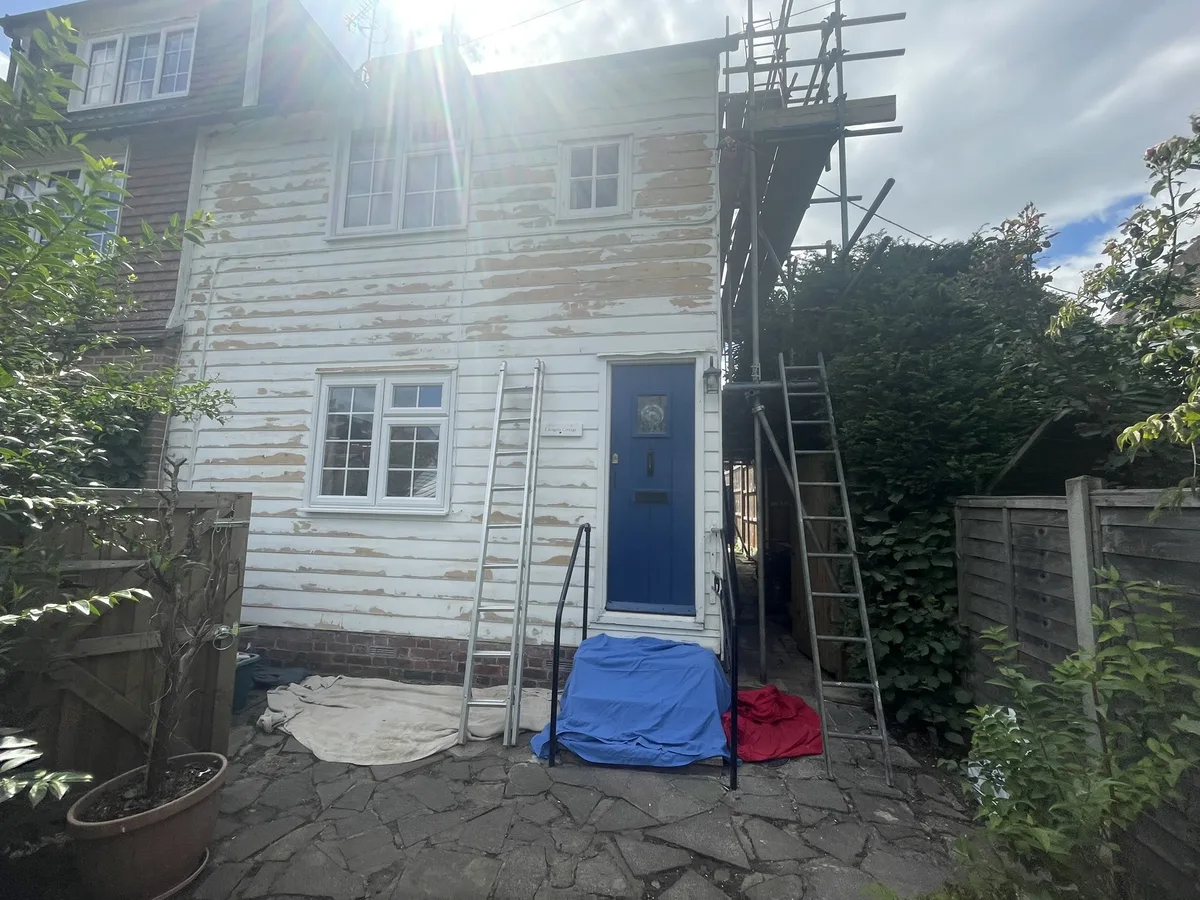
Where the timber has held up, careful preparation and a suitable protective system may be all that is required. Where it has genuinely failed, it needs repairing first, because no coating will restore timber that has already broken down. You can see the range of conditions we encounter across our recent projects, from tired paint over sound boards to elevations that needed selective renewal.
Signs of Problems Behind the Weatherboards
Occasionally the boards are telling you about something happening behind them rather than in the timber itself. This has to be approached cautiously, because visible defects rarely prove what is going on out of sight. Signs that can sometimes warrant a closer look include:
- persistent damp concentrated in one area
- repeated movement that returns after refixing
- boards that will not stay fixed
- staining emerging through the joints
- widespread failure across a defined section
- evidence that water has been getting in for some time
None of these on its own proves hidden structural damage, and it would be wrong to jump to that conclusion. What they can justify is the careful, selective removal of a board or two where there is a genuine reason to inspect what lies behind, so that any underlying issue is understood before the boarding goes back.
When a Repaint May Be All That Is Needed
It is worth saying plainly that a great many elevations that look tired need nothing more than proper repainting. Repainting may be the right answer where:
- the timber remains firm and serviceable
- the paint failure is mainly on the surface
- joints and fixings are still sound
- the source of any local moisture has been dealt with
- preparation can create a sound surface to work on
- there is no significant decay in the boards
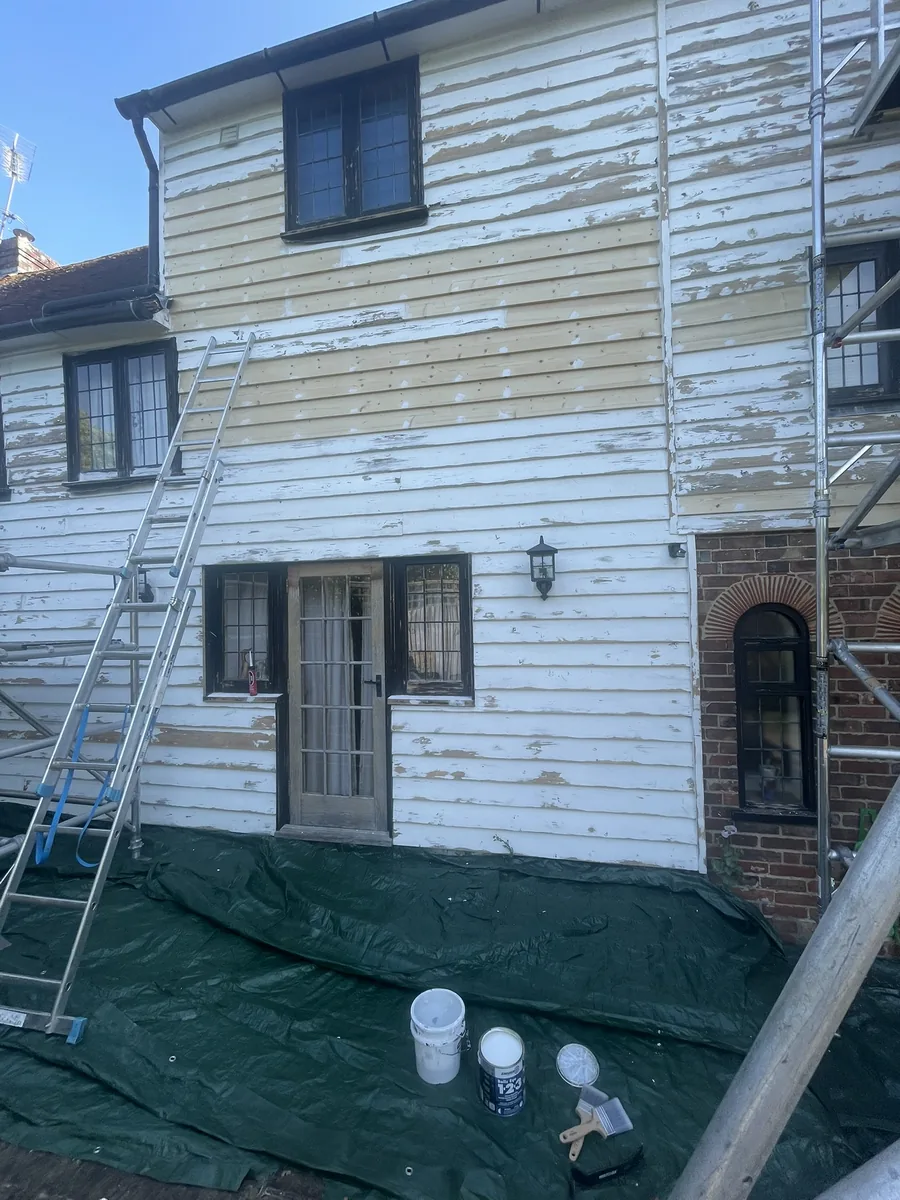
The part that matters most here is preparation, not the paint itself. Rubbing down, making good and treating the timber properly is what makes a repaint last, whereas another coat brushed over a poorly prepared or damp surface will fail again before long.
When Repair May Be Appropriate
Between a simple repaint and full replacement sits a good deal of sympathetic repair, which is where much heritage work belongs. Repair may be suitable where:
- decay is localised rather than widespread
- the surrounding timber remains sound
- only an end or a short section of a board has failed
- individual boards can be renewed among sound neighbours
- a spliced repair would be durable in its position
- loose but sound boards can be refixed
- the original profiles can be retained or accurately matched
Deciding where a property falls on that scale is a subject in itself, and we have set it out more fully in our guide on how to decide whether weatherboards should be repaired or replaced.
When Selective Replacement May Be Necessary
Sometimes repair is not enough, and it would be dishonest to pretend otherwise. Replacement may be the appropriate course where:
- the timber has lost its practical integrity
- decay extends through much of a board rather than sitting at one end
- boards can no longer hold a fixing
- distortion stops the boarding doing its job
- deterioration is widespread within a defined section
- repeated local repairs to the same area have failed
- access behind the boards is needed to correct a significant defect
Even then, replacement rarely means the whole building. It usually means renewing the boards or the section that has genuinely failed while keeping everything sound around it. Where renewal is the right course, our sympathetic weatherboard replacement is carried out to match the existing profile and detailing.
What Owners Should Not Do
A few habits tend to make matters worse rather than better. It is generally best to avoid:
- repeatedly painting over timber that is soft or damp
- filling over decay without correcting the cause
- sealing every visible gap without understanding it
- assuming one rotten board means the whole elevation must go
- assuming peeling paint is only ever cosmetic
- using unsafe ladders to inspect high level boards
- removing historic fabric before its condition is understood
- making significant alterations to a listed property without appropriate advice
None of this needs to be a source of anxiety. Many old buildings have endured for generations, and a measured approach usually serves them better than a rushed one.
Listed and Period Properties Need Particular Care
On a listed or period property the original weatherboarding is rarely just cladding. It contributes to the character of the building, forms part of its historic fabric, carries the established profiles and detailing, and stands as evidence of how the property was built. On a listed building it is part of what the listing protects, which is why decisions about it deserve more thought than they would on a modern house.
There is also the question of permissions. Listed building consent, or other approval, may be needed for some alterations or for more extensive replacement, and the position is not always clear cut. Where there is any uncertainty, the right step is to seek guidance from the relevant local planning authority or conservation officer. We can carry out the work sympathetically, but we do not provide legal advice on consent, and it would be wrong to suggest that all repairs need consent, that all repairs are exempt, that all like for like work is automatically permitted, or that we can authorise listed building work ourselves.
When to Arrange an Assessment
Professional attention is particularly sensible when:
- the same area repeatedly fails
- timber feels soft or has begun to crumble
- boards are loose or unstable
- staining remains during dry weather
- deterioration is concentrated below a water source
- several of these signs appear together
- the property is listed or in a conservation area
- the extent of any damage cannot be judged safely from the ground
- it is unclear whether repair or replacement is the right course
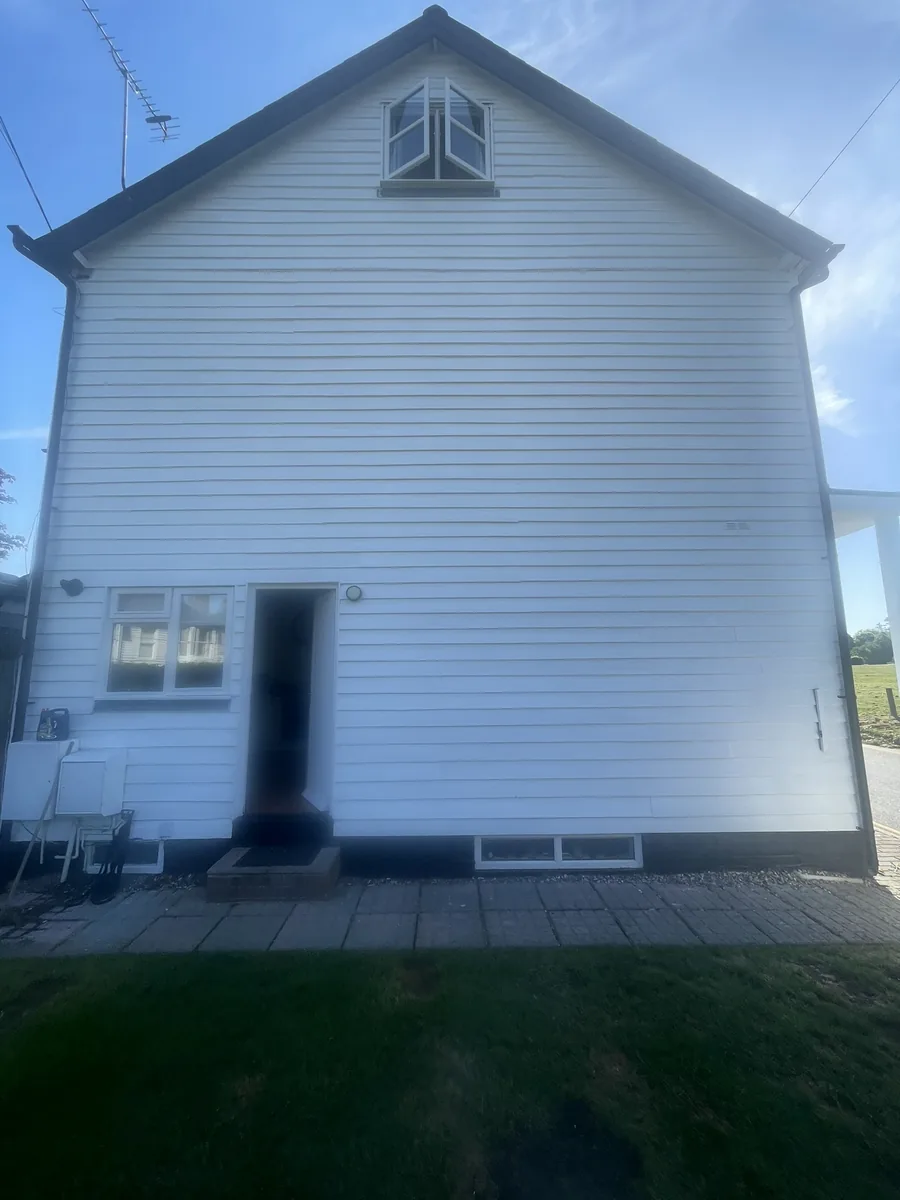
Early attention does not necessarily mean extensive work. In many cases it allows the underlying cause to be corrected while more of the original weatherboarding remains serviceable. A careful assessment can distinguish between a coating problem, a local repair and an area where selective replacement is genuinely required. Early attention may also help limit the extent of any later repairs.
Common Questions
Does peeling paint mean my weatherboards are rotten?
Not necessarily. Paint can fail for reasons that have little to do with the condition of the timber, such as age, exposure, poor preparation during earlier work or an unsuitable coating. In many cases the boards beneath a flaking finish are still sound and simply need proper preparation and repainting. What is worth watching is paint that fails repeatedly in the same spot, because that can point to moisture reaching the timber. Appearance from the ground is only a starting point, and a closer look is needed before anyone can say what is really going on.
How can I tell whether a weatherboard is soft or decayed?
Sound timber feels firm and solid, whereas timber that has started to break down can feel soft, spongy or powdery, particularly at board ends, lower edges and around fixings. Dark staining that lingers in dry weather and paint that keeps failing in one place are also worth noting. That said, decay can travel further behind the paint than the surface suggests, so we would not encourage anyone to go probing or climbing to find out. A safe, close inspection by someone used to old buildings is the reliable way to judge condition.
Is a gap between weatherboards always a serious problem?
Not always. Timber moves with the seasons, and some movement at joints is normal on an old building. A gap becomes worth attention when it lets wind driven rain reach vulnerable end grain or sits above an area that is already deteriorating. The instinct to run a bead of sealant along every gap is understandable, but it can trap moisture behind the boards or hide the underlying cause. Understanding why a gap has opened matters more than simply filling it.
Can one rotten weatherboard be replaced on its own?
Often, yes. Where a single board has failed but the boards around it remain sound, that board can usually be renewed on a matching profile while the rest stays in place. Replacing a whole elevation because one board has gone is rarely necessary and tends to lose original timber that still has years left in it. The one thing worth checking is whether the failed board is a sign of a wider problem affecting its neighbours, which is why the surrounding timber is always looked at too.
Should I wait until the next repaint before dealing with damaged boards?
It is usually better not to wait. Where timber is soft, boards are loose or an area keeps failing, leaving it until a future repaint often means the problem spreads and more original material is lost. Catching it earlier tends to keep the work smaller and allows more of the existing boarding to be saved. If the issue is genuinely only tired paint over sound timber, then dealing with it at the next repaint may be perfectly reasonable, which is exactly why it helps to know which of the two you are looking at.
Do repairs to listed weatherboards require consent?
It depends on the work. On a listed building the weatherboarding is part of the protected fabric, and more extensive replacement or any change to its character may require listed building consent, while sympathetic like for like repair is often treated more pragmatically. The position is not always clear cut. Where there is any doubt, the sensible step is an early conversation with your local planning authority or conservation officer. We carry out the work sympathetically, but we do not give legal advice on consent.