Grade II Listed Oast House Weatherboard Restoration
Northiam, near Rye, East Sussex
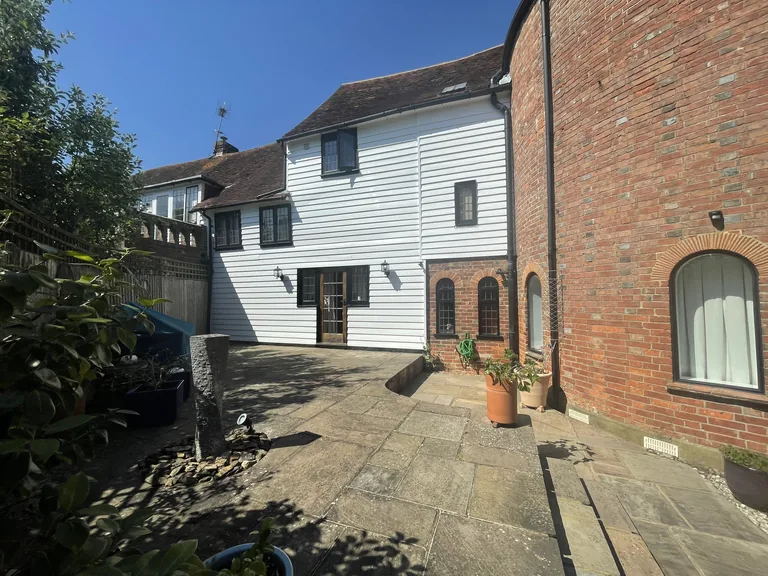
A sympathetic weatherboard restoration to a Grade II listed oast house near Rye. The elevations had suffered years of exposure and widespread coating failure, but the right response was not wholesale replacement. The work began by assessing the timber, retaining sound original boards wherever practical and renewing only those that had genuinely failed.
Project Overview
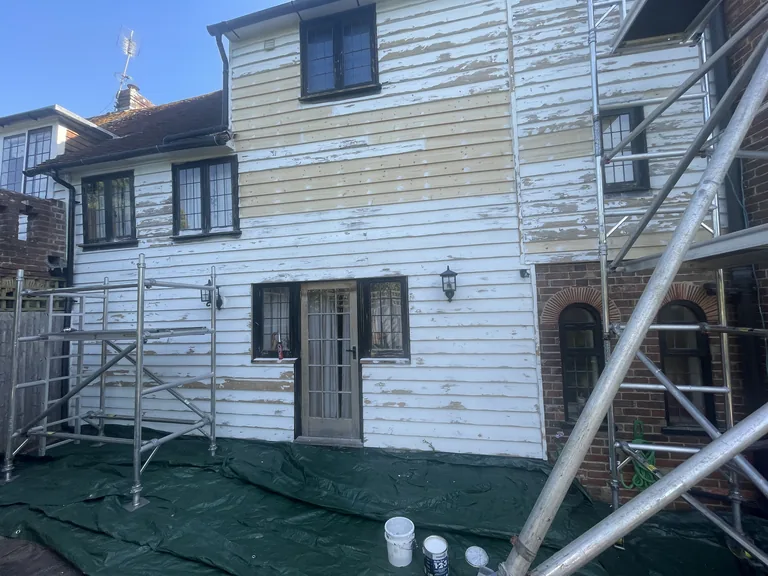
On close inspection, the rear elevation showed that a number of boards had rotted through and needed replacing, while many loose boards could be carefully refixed and saved. Rotten boards were renewed on a matching profile to preserve the character of the building, and sound original boarding was retained and refixed rather than replaced needlessly.
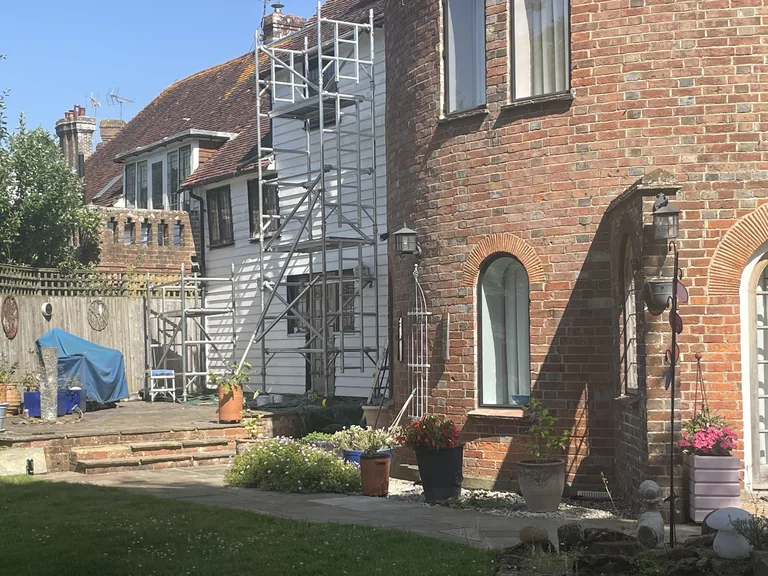
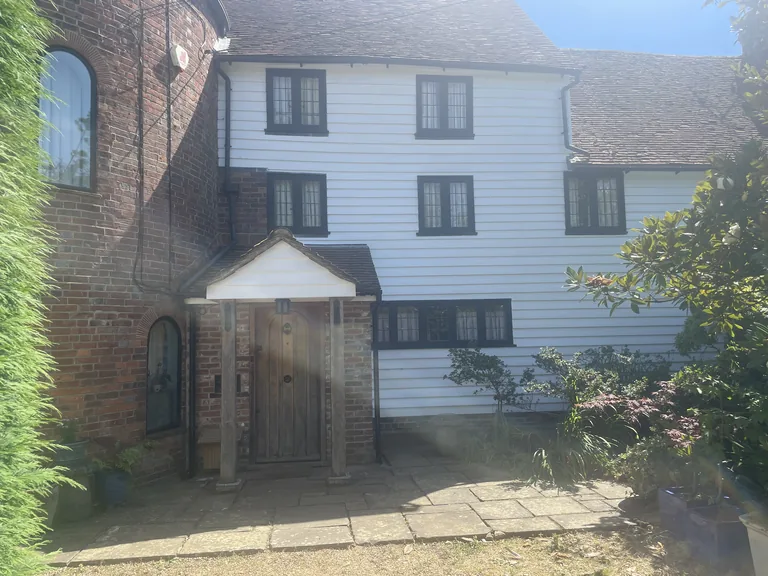
The works covered the front and rear elevations, both porches (one at the front and one at the side) and the outhouse. Every area was thoroughly prepared before any fresh paint was applied, and the weatherboarding was then finished in Sadolin Superdec Satin, a durable, breathable coating suited to traditional timber.
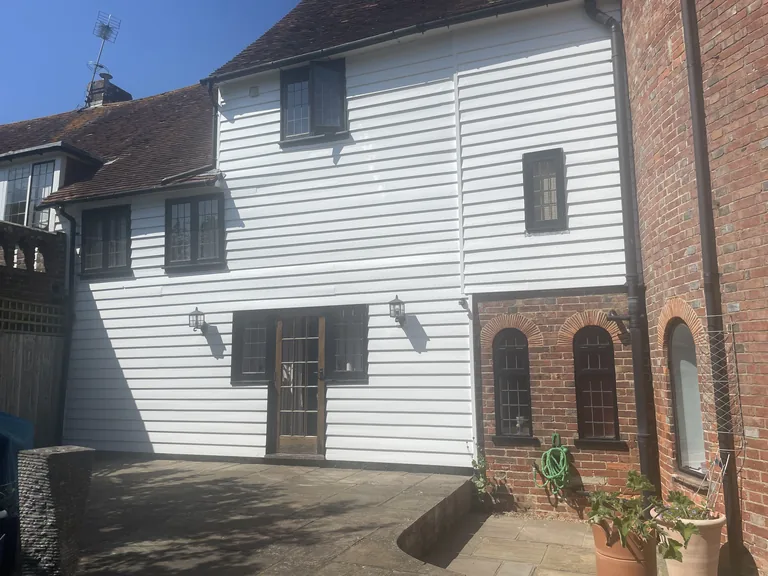
The oak doors and all of the window frames shown were prepared by hand, and the doors were finished in Osmo Clear Varnish to protect the timber while letting the natural grain show through.
Before Restoration
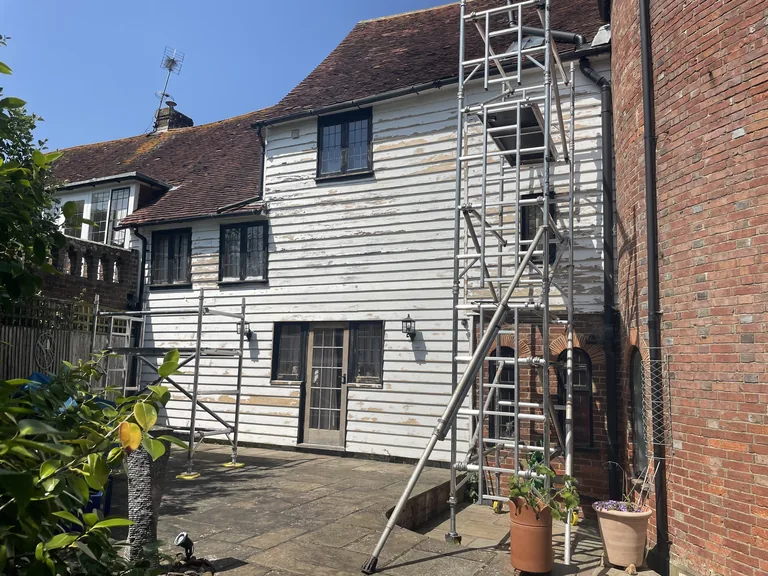
Years of exposure had left the paintwork failing widely across the rear elevation, with coatings flaking and lifting from the boards. At first glance an elevation in this condition can look as though it needs replacing in its entirety.
Appearances can be misleading, though. Flaking paint is a coating problem first and foremost, and it does not, on its own, tell you how much of the timber beneath has actually failed. The only way to know is to assess the boards properly.
Assessing What Could Remain
Visibly poor paintwork does not automatically mean that every board requires replacement. Our starting point on a listed building is always to establish what is genuinely sound and what has truly failed, rather than assuming the worst and stripping the elevation back to nothing.
The assessment considered:
- the condition of the timber beneath the failed coating
- which boards remained firm, sound and serviceable
- which boards had rotted through and could no longer hold a fixing
- boards that had simply worked loose and could be refixed
- the existing board profile, so any renewal could be matched
Only once the timber has been looked at in this way is it possible to make a fair judgement about which boards to keep, which to refix and which to renew.
Selective Weatherboard Repairs
Where boards had rotted through, they were renewed using a matching profile so the repairs sit comfortably alongside the retained boarding. Boards that were sound but had simply worked loose were refixed rather than replaced.
This selective approach keeps as much of the original fabric as the condition of the timber sensibly allows. Renewing only what has genuinely failed, on a like for like profile, is the approach best suited to a Grade II listed building.
Preparation and Repainting
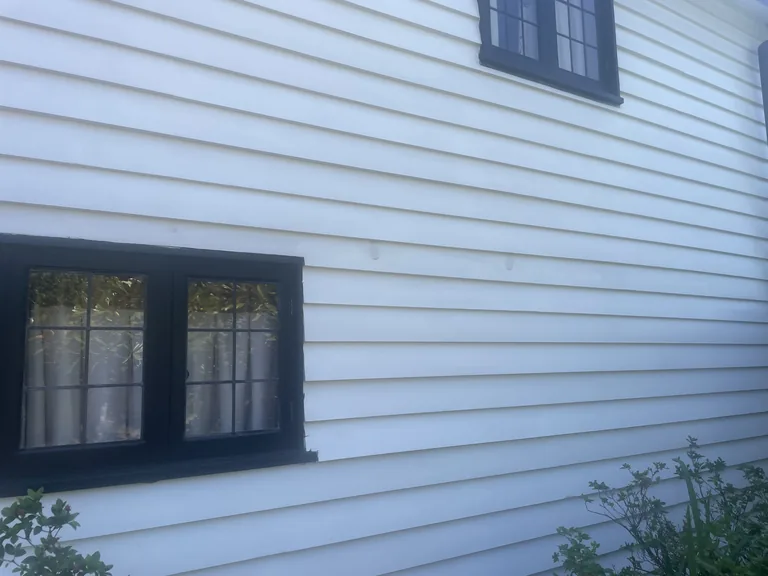
Thorough preparation is what makes the difference between a finish that lasts and one that fails again before long. Loose and failing coatings were removed, the remaining timber was prepared and the repairs were completed before any fresh paint was applied.
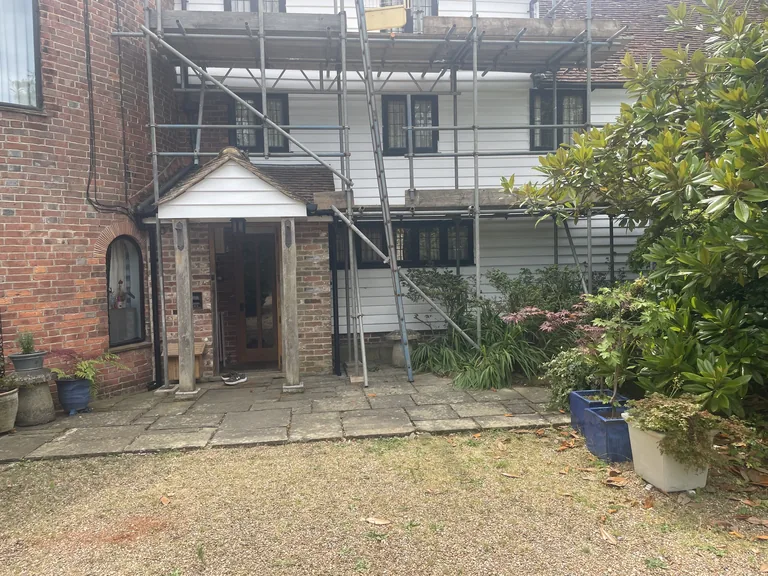
Only then were the elevations repainted, with a stabilising undercoat followed by three top coats of Sadolin Superdec Satin, which allows the timber to move and breathe. Independent scaffolding to the porches gave safe, full access to the more sheltered timber so nothing was skipped.
Working With the Listed Building
On a listed property, the existing weatherboarding is part of what gives the building its character and its protection. The established profiles, overlaps and detailing all matter, which is why renewal was matched to the original rather than substituted for something more convenient.
Listed building consent or conservation advice may be required for some alterations or more extensive replacement. Where the position is uncertain, owners should speak to the relevant local planning authority or conservation officer before work begins. We carry out the physical repair, preparation and repainting sympathetically, but we do not provide legal advice or authorise listed building works.
The Completed Result
The finished elevations combine retained original boards, local renewal where the timber had failed, careful preparation and a fresh, breathable paint finish. The result respects the character of the oast house while giving the timber sound protection against the Wealden weather.
Repair Rather Than Automatic Replacement
This project is a good example of the wider approach we take to traditional weatherboarding. A tired, flaking elevation is not, in itself, a reason to replace every board. Assessing the timber first often shows that much of the original boarding remains sound and can be retained.
Retaining what continues to serve the building and renewing only what has genuinely failed protects both the character of a listed property and the money spent looking after it.
Related Services and Guidance
Need Advice About Your Weatherboards?
If your weatherboarding is looking tired or the paintwork is failing, we can assess the condition of the existing timber and explain the most appropriate way forward: repair, preparation and repainting, or selective replacement where it is genuinely needed.