There is no single paint that is best for every building. What matters far more than the brand is preparation and the control of moisture. The right coating has to suit the timber, the finish already on it and how exposed the elevation is. On traditional weatherboarding a flexible opaque external timber coating, used as part of a compatible system, is often appropriate, but that is a starting point rather than a rule. Decayed boards must be repaired before any paint goes on, because no coating will restore timber that has already broken down. Whatever product is chosen, it should be applied as a complete system, following the manufacturer’s instructions, on sound and sufficiently dry timber.
The Best Paint Is Part of a Complete System
Choosing paint for weatherboards is not simply picking the best product. The coating is only one part of a system, and the whole system decides how the finish performs: preparation, any primer, the number of top coats and the conditions on the day matter as much as the name on the tin. A suitable coating applied correctly to sound, well prepared boards is likely to perform better than an expensive product applied over damp or unstable timber.
Start With the Condition of the Timber
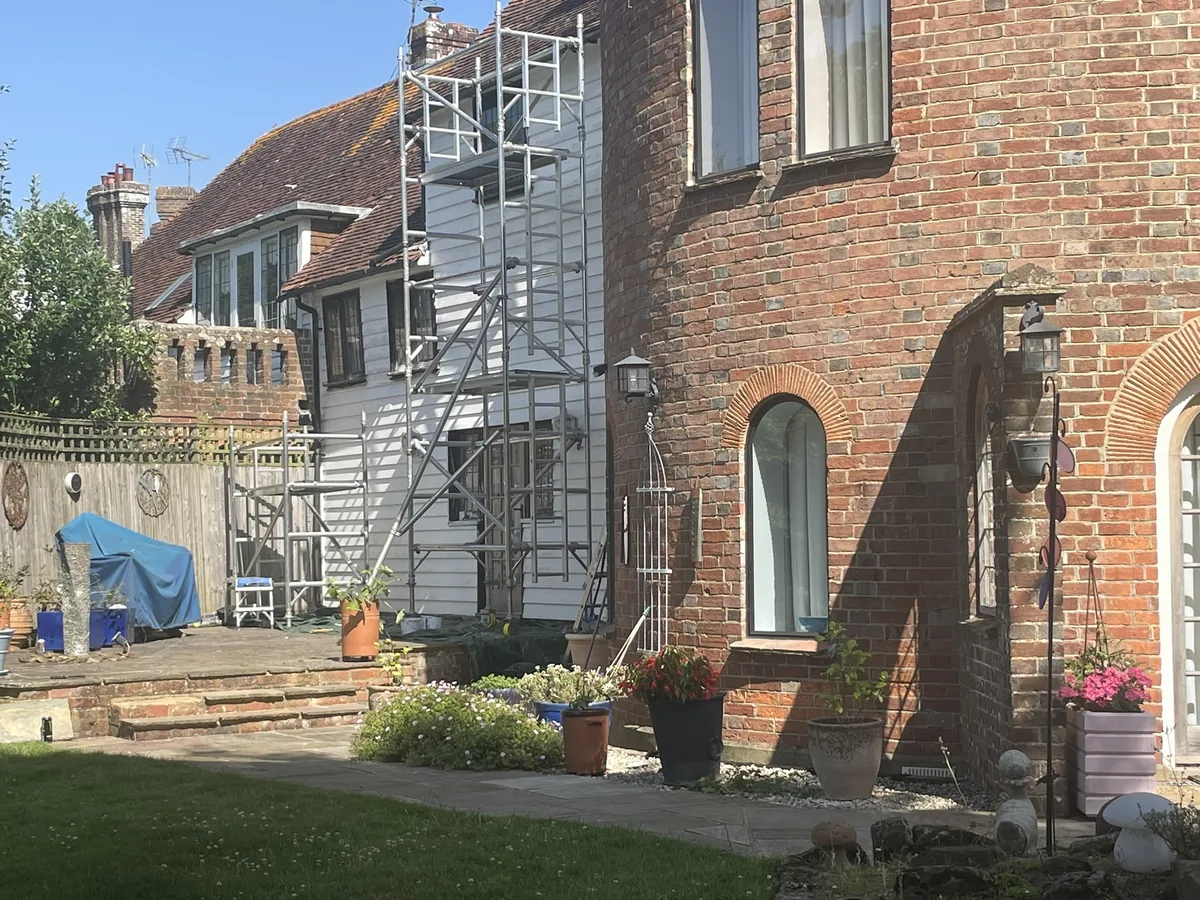
Before any decision about paint, the condition of the timber comes first. Paint protects sound timber but cannot rescue timber that has already decayed, and a finish over soft boards simply hides a problem that returns. An honest look at the boarding is the starting point, including whether there are signs that weatherboards need closer attention such as soft timber, repeated paint failure or persistent staining. Where boards have failed, deal with the timber first through heritage weatherboard repairs and paint afterwards.
Why Preparation Matters More Than the Brand Name
If there is one message worth taking from this guide, it is that preparation matters more than the brand of paint. A good coating over a poorly prepared surface will fail; a modest one over well prepared timber performs well. Good preparation generally involves several steps:
- removing loose, flaking or unstable paint
- cleaning down dirt, algae and surface growth
- rubbing down to create a sound surface
- making good minor defects in the timber
- allowing damp timber to dry before coating
- priming bare timber where the system requires it
Preparation is often the most time consuming part of the work, but it provides the stable surface the coating needs. Remaining moisture, loose material or rushed preparation can all shorten the life of the finish.
Opaque or Translucent Finish?
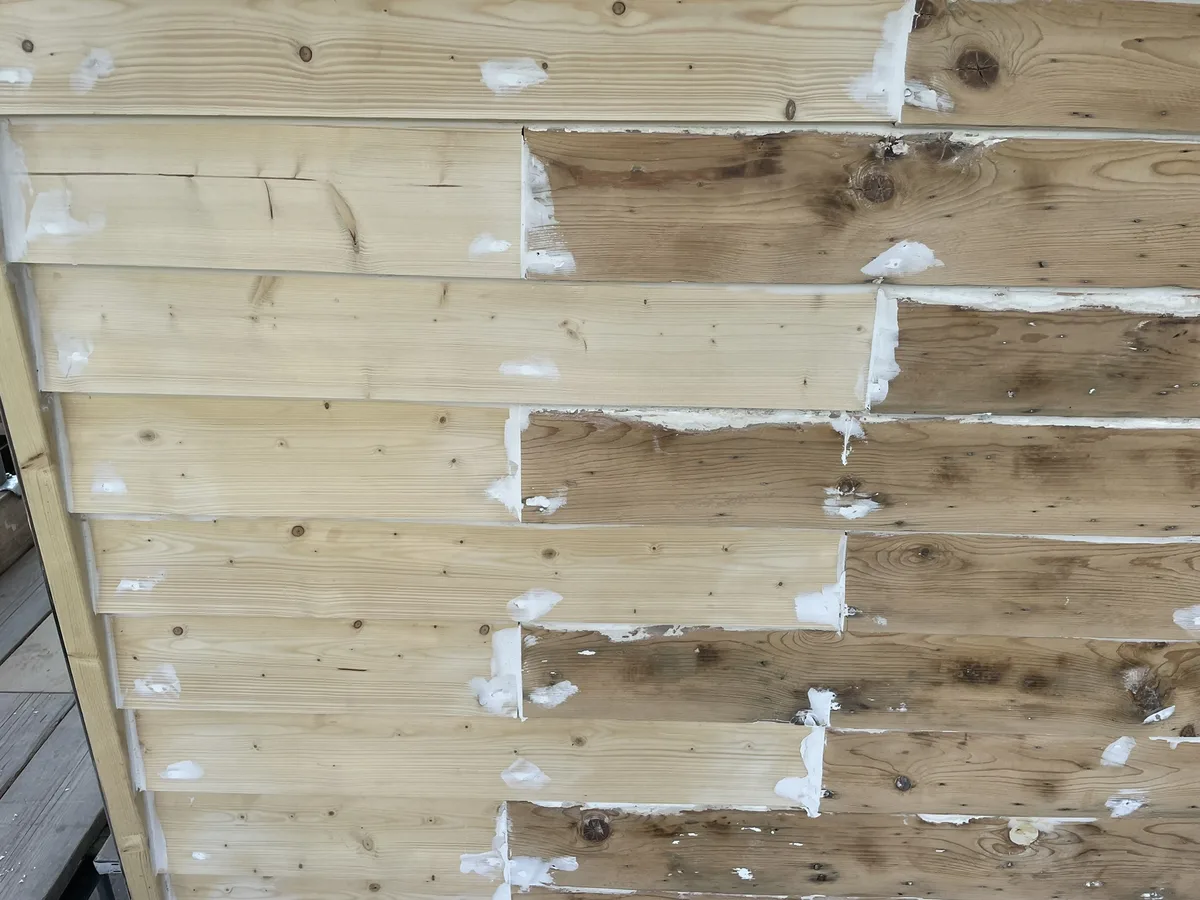
One early choice is between an opaque finish, which conceals the timber and gives a solid colour, and a translucent finish, which lets the grain show through. Painted weatherboarding in white, cream or a darker shade is what many period properties across Kent and East Sussex have worn for generations, while a translucent finish suits timber meant to be seen, such as oak joinery. Moving from an opaque paint to a translucent finish is rarely straightforward, so continuing with a similar finish is often more practical.
What Does Breathable or Microporous Paint Mean?
The terms breathable and microporous are commonly used for coatings designed to allow a degree of water vapour movement while resisting liquid water from outside. They do not cure damp or make timber immune to moisture. Performance depends on the complete coating build up, the condition of the timber, compatibility with any earlier paint layers and whether sources of water entry have been corrected. Applying a vapour permeable coating over an incompatible or poorly adhered old finish may not produce the expected result. The manufacturer’s current technical information should therefore be checked for the complete system rather than relying on the description on the front of the tin.
Why Flexibility Matters on Timber
Timber moves as its moisture content and the surrounding conditions change. A suitable exterior coating should accommodate normal movement without cracking or losing adhesion prematurely. Flexibility cannot compensate for rotten timber, loose boards, large moving joints or failed construction details. Those defects need to be understood and corrected before the coating is applied.
Does Bare Timber Need Priming?
Priming is often assumed to be an unavoidable first step, but it depends on the coating system. Some exterior wood coatings are self priming and go directly onto bare timber; others rely on a separate primer to seal the surface and promote adhesion. Certain timbers, particularly resinous softwoods and some hardwoods, can benefit from a blocking primer to stop resins or tannins bleeding through a pale finish. There is no single rule, so what matters is following the instructions for the specific product.
New Weatherboards and Replacement Timber
New boards and replacement timber bring their own considerations. Fresh timber may still be adjusting its moisture content, and some species behave differently under a coating than boards weathered in place for decades. Where new boards are introduced among old ones, the aim is a consistent finish so the repair does not stand out. Where an elevation needs boards renewed, our approach to sympathetic weatherboard replacement is to match new timber to old and finish it so it sits comfortably alongside the retained boards.
Painting Over Existing Paint
Many elevations are repainted over an existing coating rather than stripped back to bare timber, and there is nothing wrong with that where the old paint is sound. The questions worth asking are whether it is well adhered, stable rather than flaking, and compatible with the new finish. Where the answers are favourable, the boarding can be cleaned, rubbed down and repainted without removing everything first. Where the old paint is unstable or incompatible, the loose material must be removed and the surface made sound first.
Why Weatherboard Paint Peels or Fails Early
When paint fails sooner than it should, the cause is rarely the paint alone but the surface beneath or the conditions it must cope with. Common reasons include:
- painting over damp timber that had not dried out
- inadequate preparation before coating
- moisture from a leaking gutter or open joint
- an unsuitable or incompatible coating
- timber movement breaking a brittle paint film
- decay that was painted over rather than repaired
Where paint keeps failing in the same place, that is a signal to find the underlying cause rather than simply repaint. Often the trigger is moisture, closely bound up with the reasons that timber weatherboards begin to rot. Correcting the source allows the next finish to last.
Lead Paint and Older Buildings
On older properties one further matter is worth being aware of. Paint made before lead was phased out of decorative coatings can contain lead, and disturbing it by sanding, scraping or burning off can release harmful dust or fumes. This is not a reason for alarm: lead paint that is sound and left undisturbed is generally considered low risk. Current UK guidance from the Health and Safety Executive advises avoiding dry sanding and burning off older paint that may contain lead, keeping dust down and protecting workers and occupants, with particular care where children or expectant mothers are present. Where there is any doubt, the safe course is caution and appropriate advice rather than aggressive stripping.
What About Bedec Barn Paint and Sadolin Superdec?
Two products owners often ask about by name are Bedec Barn Paint and Sadolin Superdec. Both are opaque exterior wood coating systems from established manufacturers, widely used on timber cladding and weatherboarding. We have used each on genuine projects: Bedec Barn Paint on listed properties on Bridewell Lane in Tenterden and The Moor in Hawkhurst, and Sadolin Superdec on a listed oast house near Rye and a cottage repaint in Cranbrook.
It would be wrong, though, to describe either as the best paint for every building. Which product suits an elevation depends on the timber, the existing finish, the exposure and the result the owner wants. We choose the system to suit the building rather than applying the same product to every job.
Colour and Sheen on Listed and Period Properties
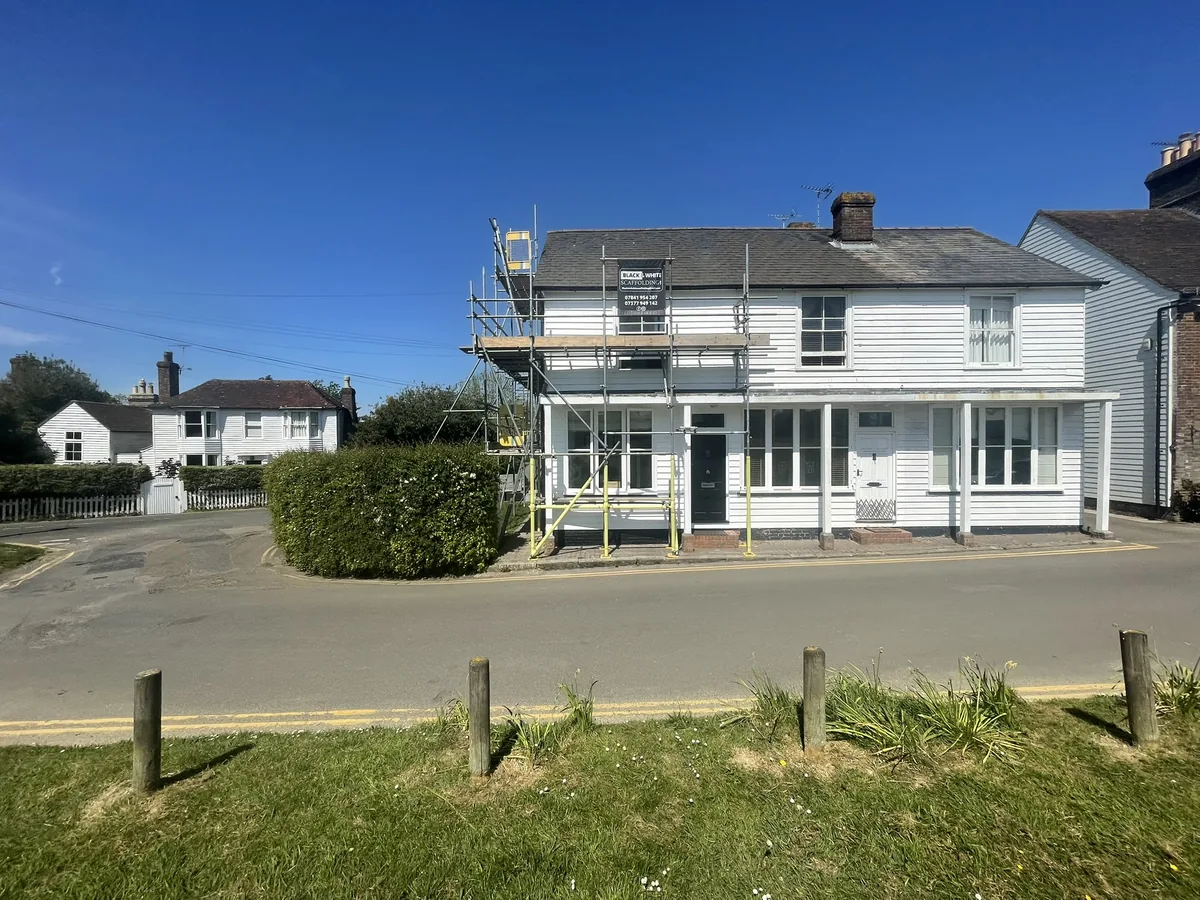
Colour and sheen are not only a matter of taste on older buildings. On a listed property the established appearance of the weatherboarding can form part of what is protected, and a marked change of colour or sheen may sometimes require advice or consent from the local planning authority or conservation officer. Where there is any doubt an early conversation with the relevant authority is sensible. On many period properties, retaining an established colour and sheen is often the most sympathetic starting point. We do not give legal advice on colour or consent.
When Repainting May Be Enough
A good many tired looking elevations need nothing more than proper preparation and repainting. Where the timber is sound, paint failure is mainly on the surface, joints and fixings are in order and any local source of moisture has been dealt with, repainting can protect the boarding for years, with the value in the preparation rather than the paint. Thorough specialist weatherboard preparation and painting is then often all that is required to bring an elevation back to good order without disturbing sound original timber.
When Repairs Must Come Before Paint
There are also elevations where painting is not the first job. Where boards are soft, decayed or working loose, no coating will put that right. Painting over the problem may improve its appearance temporarily while allowing the defect to continue beneath the finish. The timber must be dealt with first, through a sympathetic repair or the selective renewal of boards that have genuinely failed, and the finish follows once the boarding is sound. Deciding where a property sits between a straightforward repaint and more involved work is set out in our guide on whether weatherboards should be repaired or replaced. Sort the timber out first, then paint.
Can Owners Paint Traditional Weatherboards Themselves?
Some owners are keen to carry out painting themselves, and on an accessible single storey elevation in sound condition, careful preparation and a suitable coating can give a good result. The real difficulties lie elsewhere: judging the true condition of the timber, preparing older surfaces properly, reaching higher boards safely, and recognising when a coating problem is really a repair problem in disguise. Working at height on a period property is not to be taken lightly, and upper boarding is best left to those set up to do it safely.
How We Choose a Coating System
Our approach is to let the building decide. Before recommending a coating we look at the condition of the timber, the finish already on it, how exposed the elevation is and how the property should look when the work is done. Only then does the choice of product follow, always used as a complete system in line with the manufacturer’s instructions. We make no promises that any coating will last a fixed number of years, because that depends on the timber, the preparation, the exposure and how the building is maintained afterwards.
The Practical Answer
The practical answer is straightforward. The best paint for traditional timber weatherboards is a suitable external coating used as part of a compatible system, after the timber has been made sound and properly prepared. The product should suit the existing finish, the exposure and the way the building needs to dry. Applied correctly and in accordance with current manufacturer instructions, it has the best chance of performing as intended. Where boards are decayed, loose or unable to hold a fixing, repair must come before paint.
Common Questions
What is the best paint for timber weatherboards?
There is no single product best for every building. The most suitable choice is usually a good quality external coating, used as part of a complete system, on timber that is sound, prepared and sufficiently dry. A flexible opaque coating is often appropriate, but the existing finish, the condition of the boards and the manufacturer’s instructions come first.
Do traditional weatherboards need breathable paint?
Water vapour permeability can be an important consideration on a traditional building, but the word breathable does not settle whether a product is suitable. The complete coating system, earlier paint layers, timber condition and ability of the construction to dry all need to be considered. A coating cannot compensate for leaking details, trapped moisture or decayed timber, so current manufacturer guidance and compatibility matter as much as the terminology.
Can I paint over old weatherboard paint?
Often, yes. Where the existing paint is sound, well adhered and compatible with the new coating, weatherboards can usually be prepared and repainted without stripping everything back. Where it is flaking, unstable or incompatible, the loose material has to be removed and the surface made sound first. Which applies is a matter of judgement based on the condition of the finish and the timber beneath.
Does bare timber need primer before painting?
It depends on the coating system. Some exterior coatings are self priming and go directly onto bare timber, while others need a separate primer, and certain timbers benefit from a blocking primer to prevent resin or tannin bleeding through a pale finish. There is no universal rule, so follow the instructions for the particular product and treat priming as part of a complete system.
Why does paint keep peeling from my weatherboards?
Repeated peeling can point to something beneath the surface rather than a fault with the paint alone: moisture from a leaking gutter or open joint, painting over damp or poorly prepared timber, an unsuitable coating, or timber movement breaking the paint film. Where paint fails again and again in the same place, the cause needs to be found and corrected, because another coat over the same problem tends to fail again.
Can I change the colour of weatherboards on a listed building?
It may be possible, but it is not something to assume. On a listed building the appearance of the weatherboarding can form part of what is protected, and a change of colour or finish may sometimes require advice or consent from the local planning authority or conservation officer. Where there is any doubt an early conversation with the relevant authority is sensible. We carry out the work sympathetically, but we do not give legal advice on consent.