Featured heritage project
Grade II Listed Farmhouse Restoration — Hawkhurst, Kent
When Routine Preparation Revealed Extensive Hidden Timber Decay
Hawkhurst, Kent
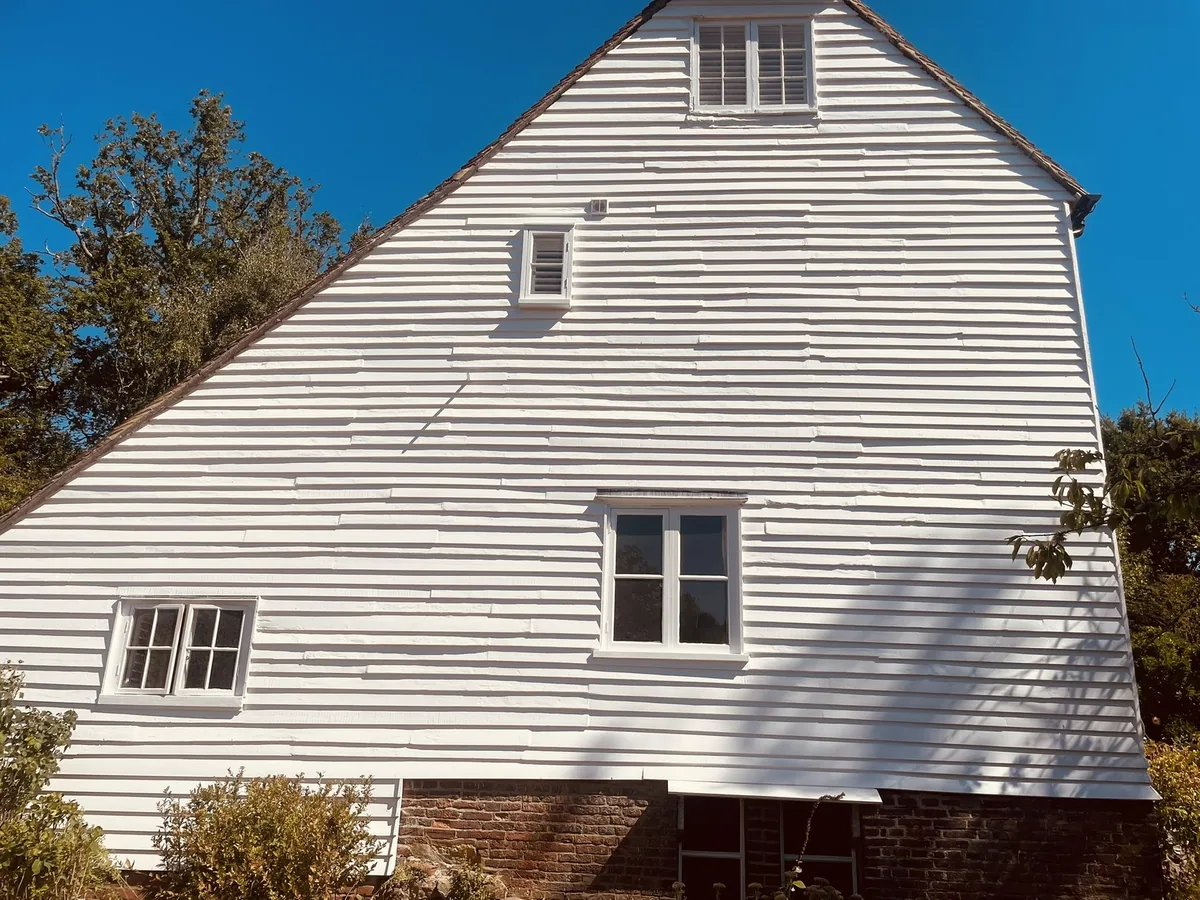
Two Gables, Two Very Different Challenges
The weatherboard restoration of this Grade II listed farmhouse in the Hawkhurst countryside involved two gable elevations with very different repair requirements. The smaller north-facing elevation needed only a handful of localised replacements.
The taller south-facing elevation, however, revealed much more extensive deterioration once preparation began. What started as routine preparation for redecoration became a careful investigation of the timber beneath the paint.
Project at a Glance
- Location
- Hawkhurst, Kent
- Property
- Grade II listed farmhouse
- Elevations
- Taller south-facing gable and smaller north-facing gable
- Work
- Heritage weatherboard restoration, selective timber replacement, preparation and exterior finishing
- Approach
- Serviceable boards retained; only boards beyond repair replaced
What Lay Beneath the Paint
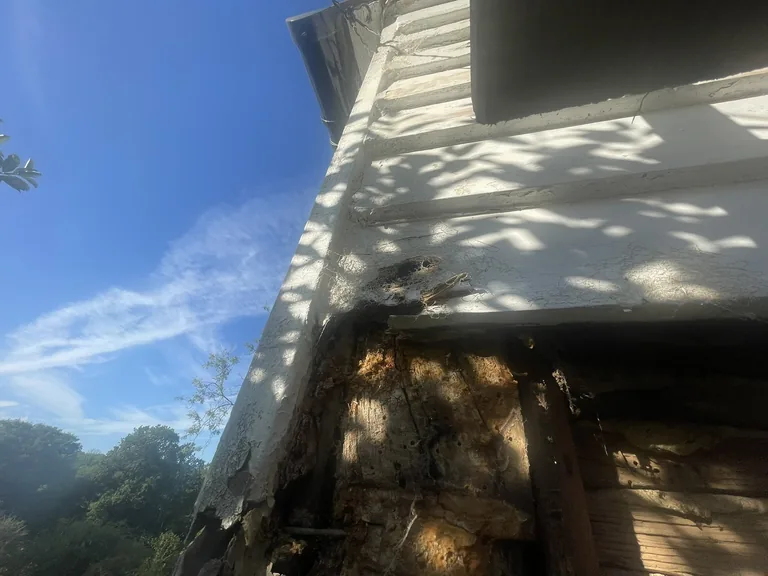
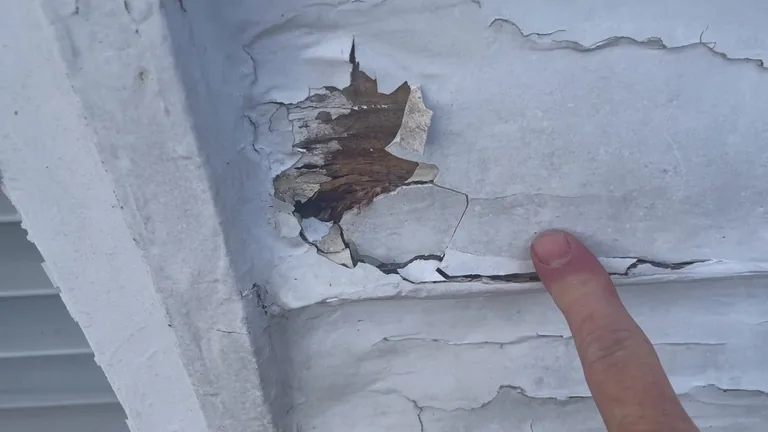
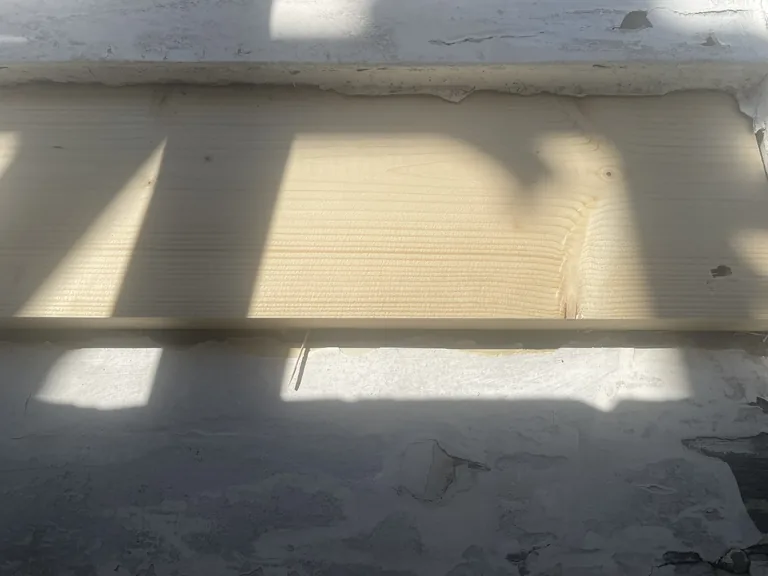
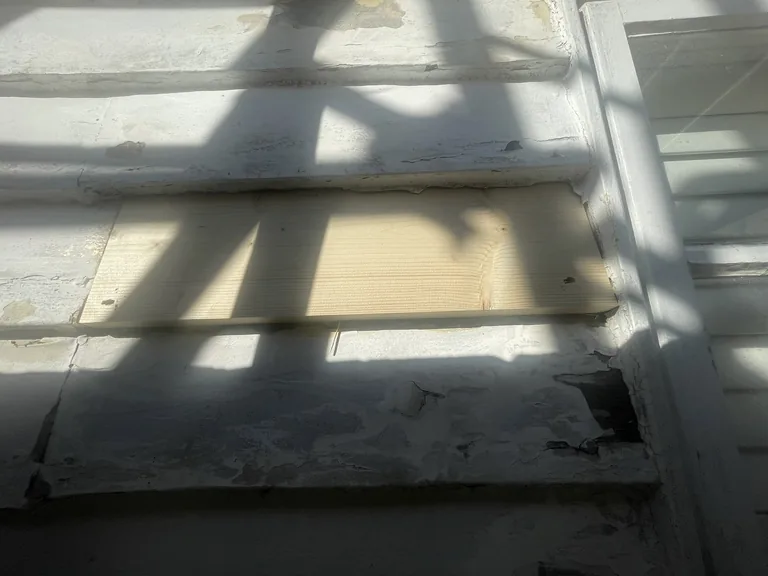
The south-facing gable carried evidence of numerous earlier repairs, some more successful than others. As existing coatings were sanded back, areas of badly degraded timber became evident. In places the weatherboarding had softened so much that it could be penetrated with a finger, a moment captured in the original site footage below.
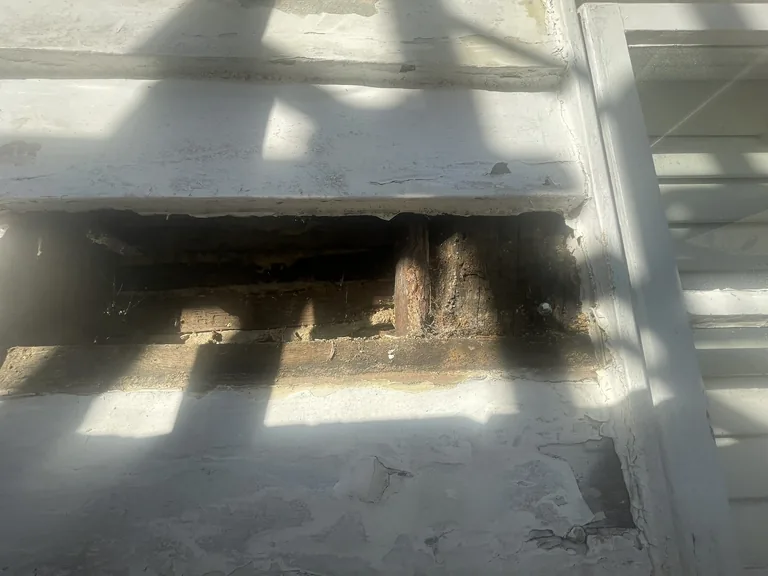
Further investigation showed that debris had accumulated over time on the supporting timbers behind the weatherboarding, holding moisture against the backs of the boards. This contributed to deterioration developing from the inside out, which is why it was not obvious from the painted surface.
Removing affected boards also exposed evidence of earlier structural timber replacements. Importantly, the supporting timbers behind the sections we needed to replace were sound; our work did not require replacing those structural members.
The Evidence of Hidden Decay
These photographs were taken on the south-facing gable as boards were sanded, opened up and assessed.
The Hidden Damage, on Film
Original site footage and project photographs, from the decay found during preparation to the finished elevations. The video has on-screen captions and no sound.
Repairing What Was Necessary
We assessed the timber carefully and retained weatherboards that remained serviceable. Boards that were too deteriorated to repair were selectively replaced, before the surfaces were thoroughly prepared and finished.
On the north-facing gable, a small number of individual boards required attention following moisture damage associated with a leaking gutter.
South and North Gables Compared
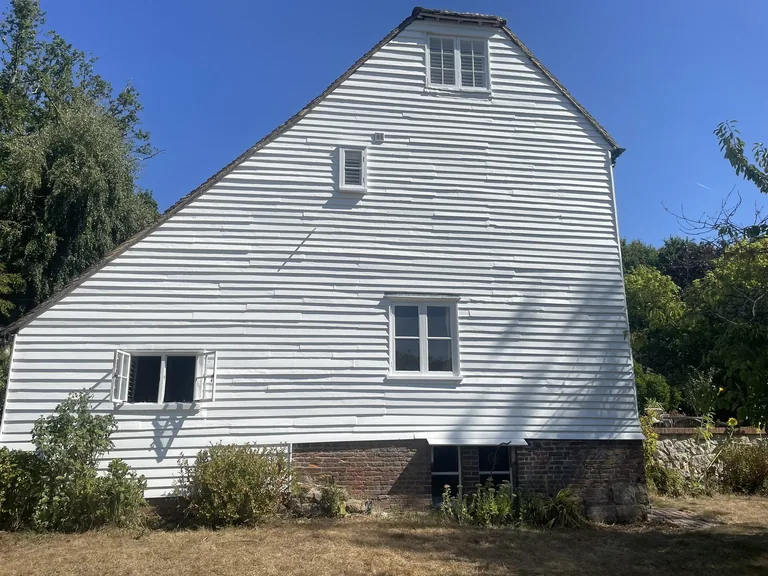
South-facing gable
- The taller elevation, and the one that needed substantially more work.
- Numerous earlier repairs of varying quality.
- Sanding revealed extensive hidden decay, with debris behind the boards holding moisture.
- Numerous boards beyond repair were selectively replaced; serviceable boards were retained.
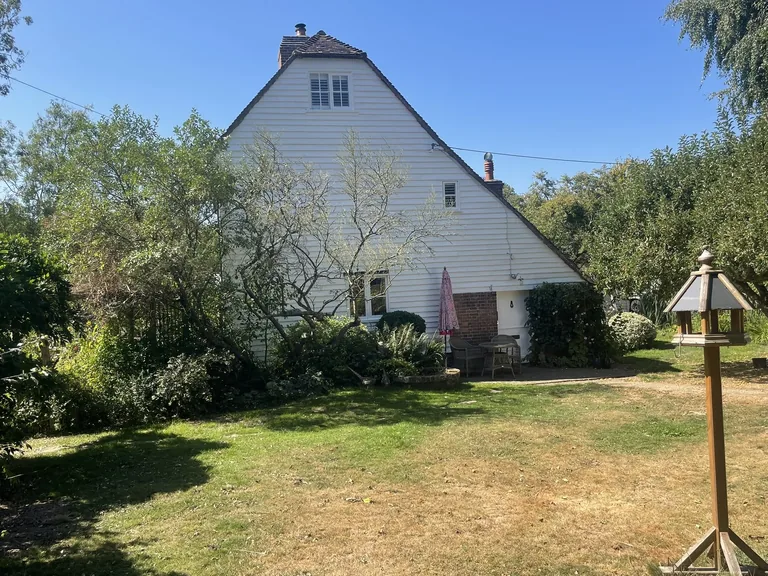
North-facing gable
- The smaller elevation, and in better overall condition.
- Only a few boards needed replacing.
- The damage was mainly associated with moisture from a leaking gutter.
- Prepared and finished to match the south-facing gable.
A Finish Built on Sound Preparation
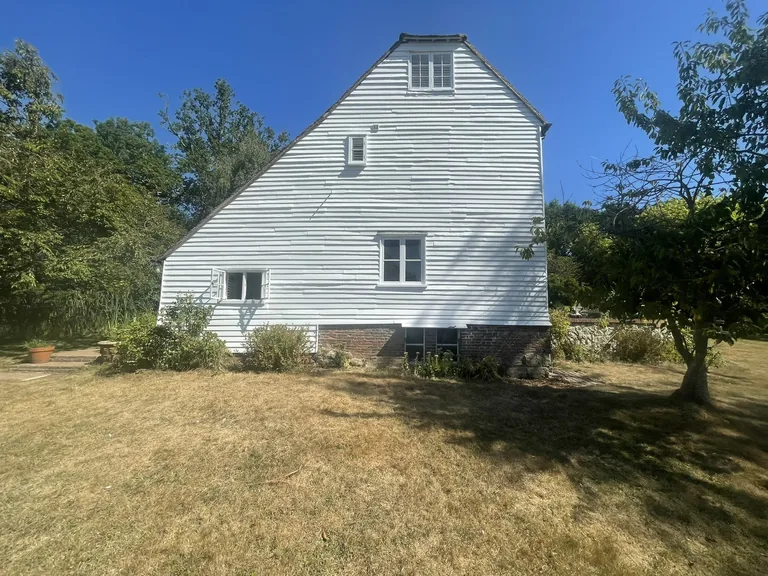
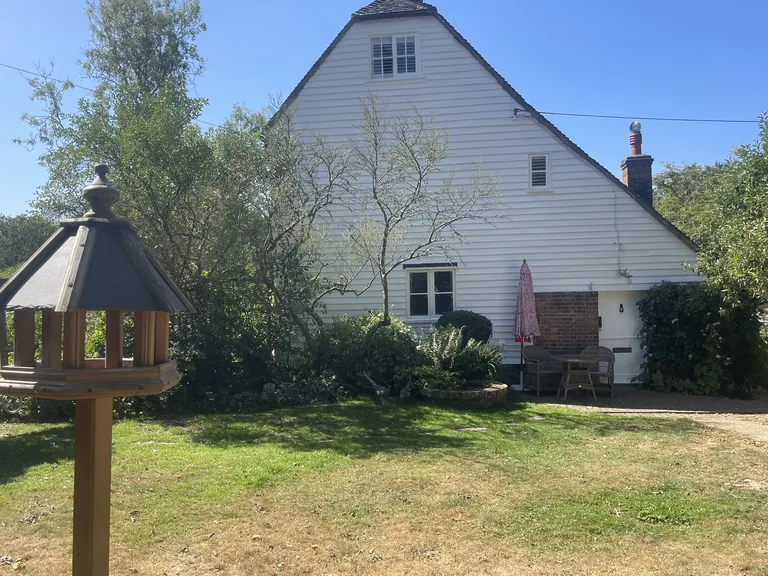
The completed elevations have a consistent appearance while retaining the farmhouse’s traditional character.
Why Specialist Heritage Restoration Matters
Another coat of paint over the south-facing gable would have looked fine for a while, but it would have sealed in timber that was failing from behind. This project shows why good weatherboard restoration starts with investigation, not simply another coat of paint.
On a listed building, it matters just as much not to remove more historic fabric than necessary. Serviceable boards stayed in place, and only timber that had genuinely failed was replaced.
Knowing what to retain is as important as knowing what to replace.
Related Services and Guidance
Services
Considering Work on a Timber-Clad or Listed Property?
Weatherboards specialises in sympathetic weatherboard repairs, selective replacement and exterior finishing across Kent and East Sussex. Tell us about your property and we will arrange a visit to assess the timber.